
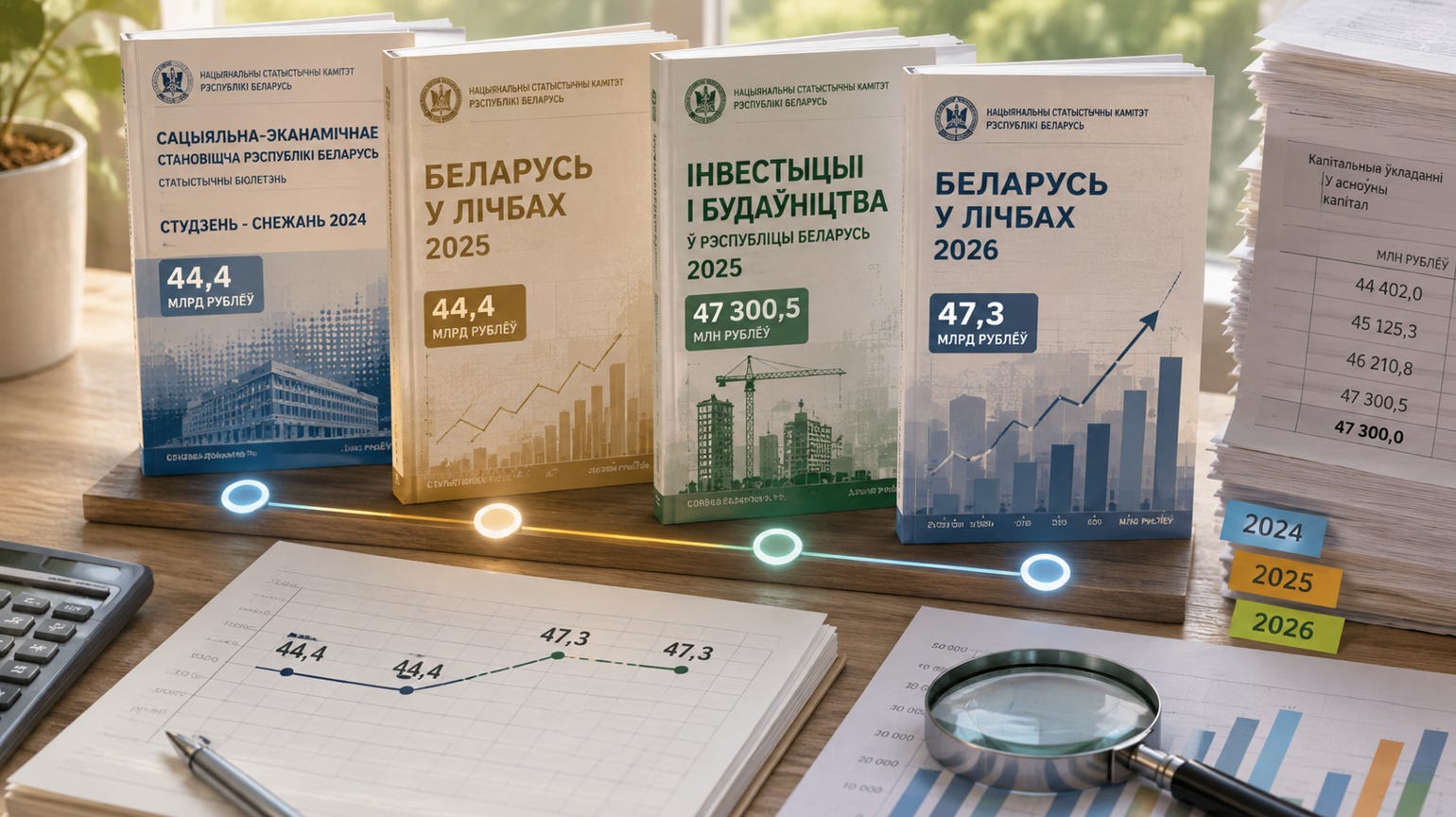
Every month National Statistical Committee of the Republic of Belarus (aka Belstat) publishes a bulletin called Socio-Economic Situation of the Republic of Belarus. The January edition closes the year. The one for January-December 2024 reported investment in fixed capital of 44.4 billion rubles, and that is the figure the country read on 24 January 2025.
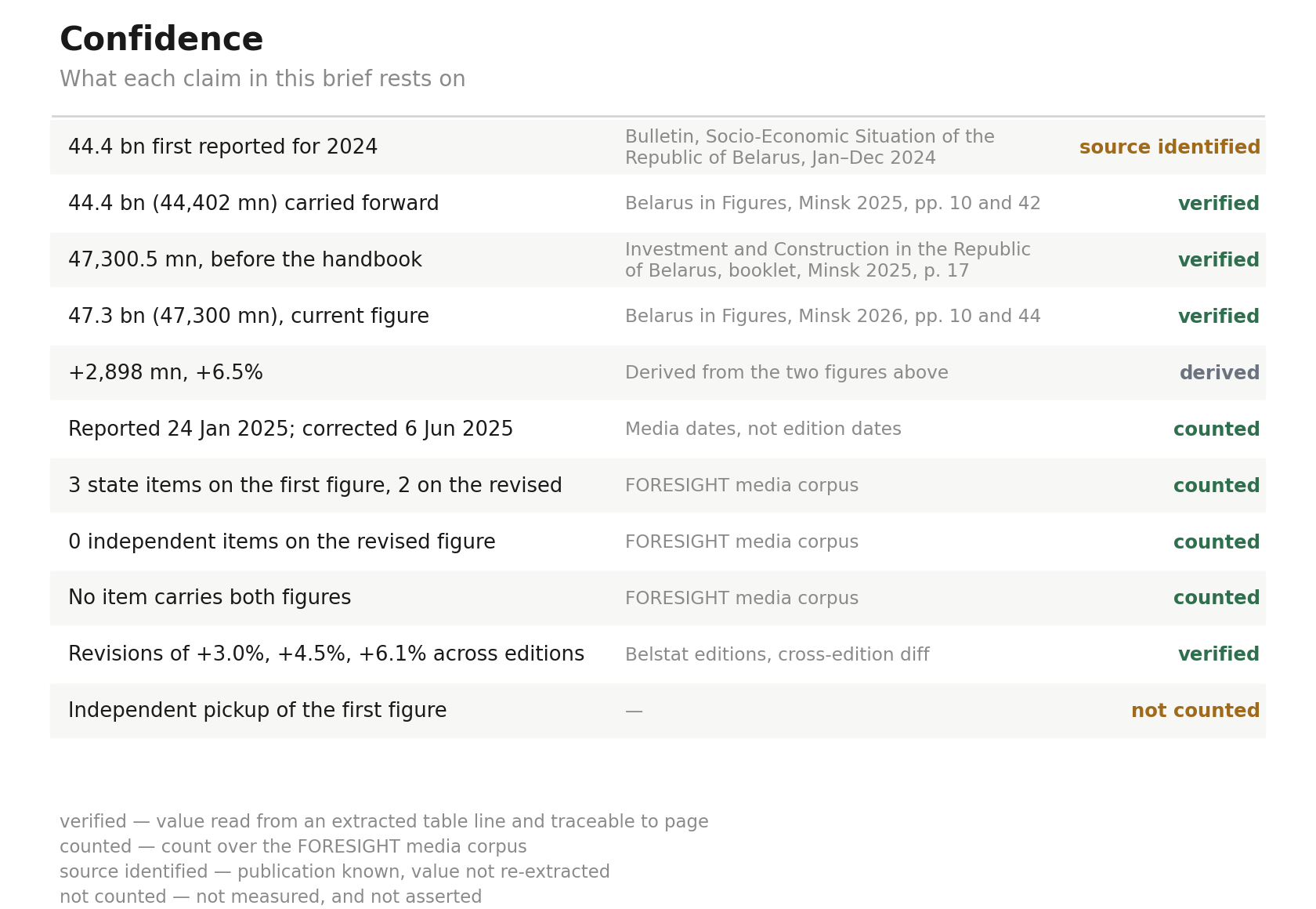
Belarus in Figures, the annual statistical handbook, carried the same 44.4 billion in its 2025 edition. Then, in a thematic booklet called Investment and Construction in the Republic of Belarus, published later in 2025, the figure for 2024 appears as 47,300.5 million. The 2026 edition of the handbook, same page ten, same line, same year, settles on 47.3 billion — 47,300 million against the original 44,402.
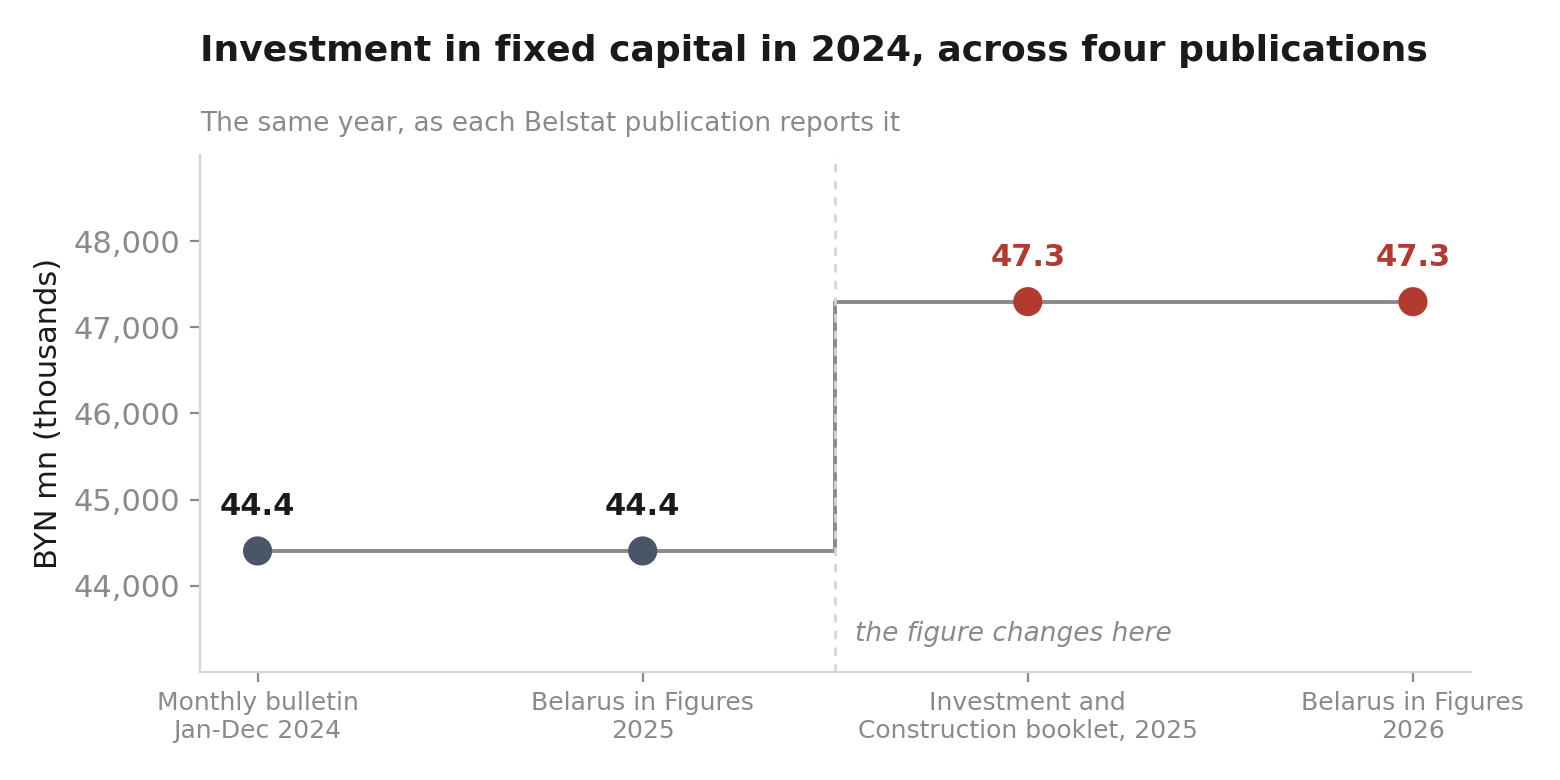
Revisions are ordinary. Statistical offices everywhere refine annual figures as late reporting arrives, as small enterprises are counted, as methodology changes. Belstat is not unusual in revising, and nothing here suggests the second figure is wrong. What is worth a moment is where each number went afterwards.
The first figure had a news cycle. It was published on 24 January 2025 and carried the same day by BELTA, by SB. Belarus Segodnya, and by the statistics committee’s own Telegram channel. The corrected figure surfaced on 6 June 2025, in a specialist booklet rather than a headline release, and was picked up by two state items. In the independent segment it appears in none. And no item on either side placed the two numbers next to each other.
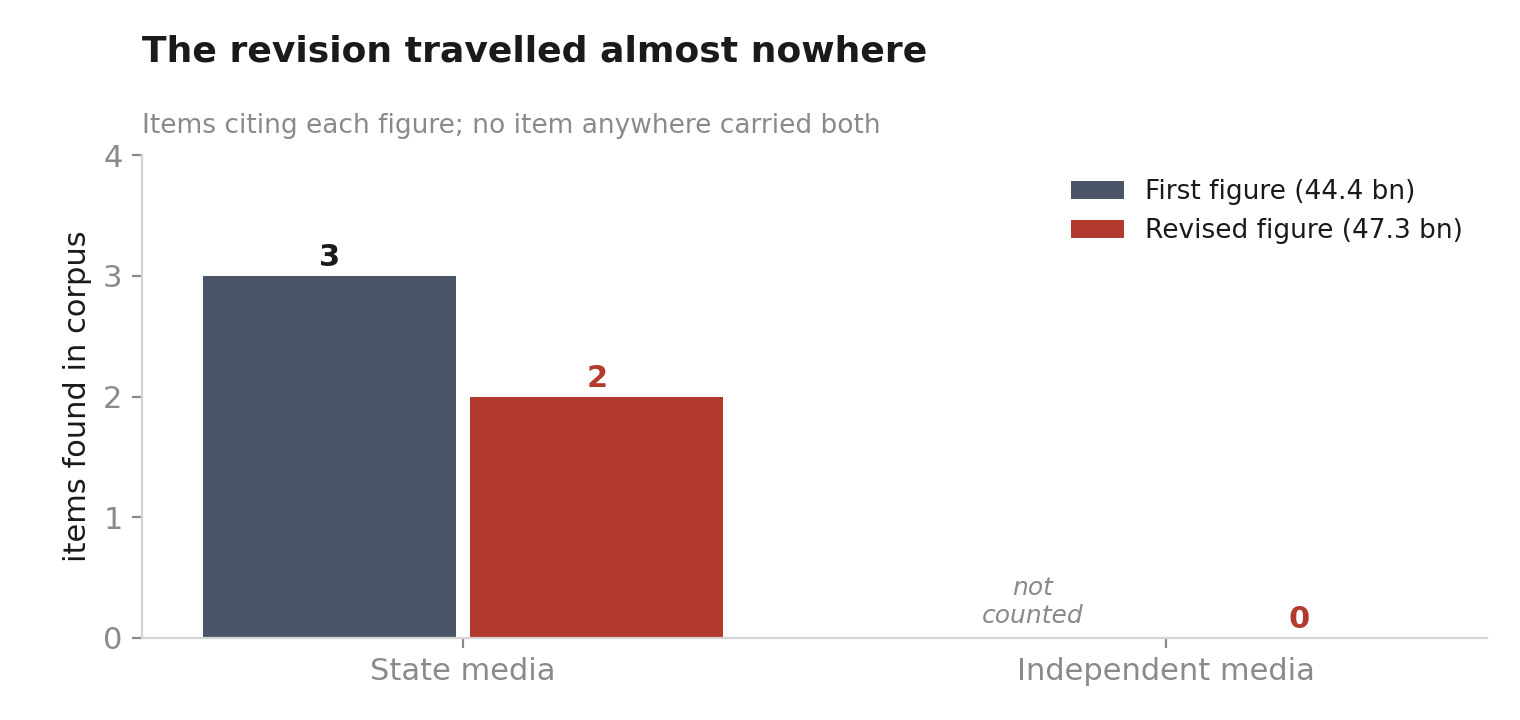
The result is two publics holding two different pasts. A reader who followed the January news knows that 2024 brought 44.4 billion. A reader who opens the statistics today sees 47.3. Nothing published in between explains the gap, because nothing published in between mentions it.
This one revision would be a curiosity. It is the pattern behind it that makes it a story. Across successive editions of the same investment series, the retrospective corrections run in one direction — upward — and the size of the correction has been growing.
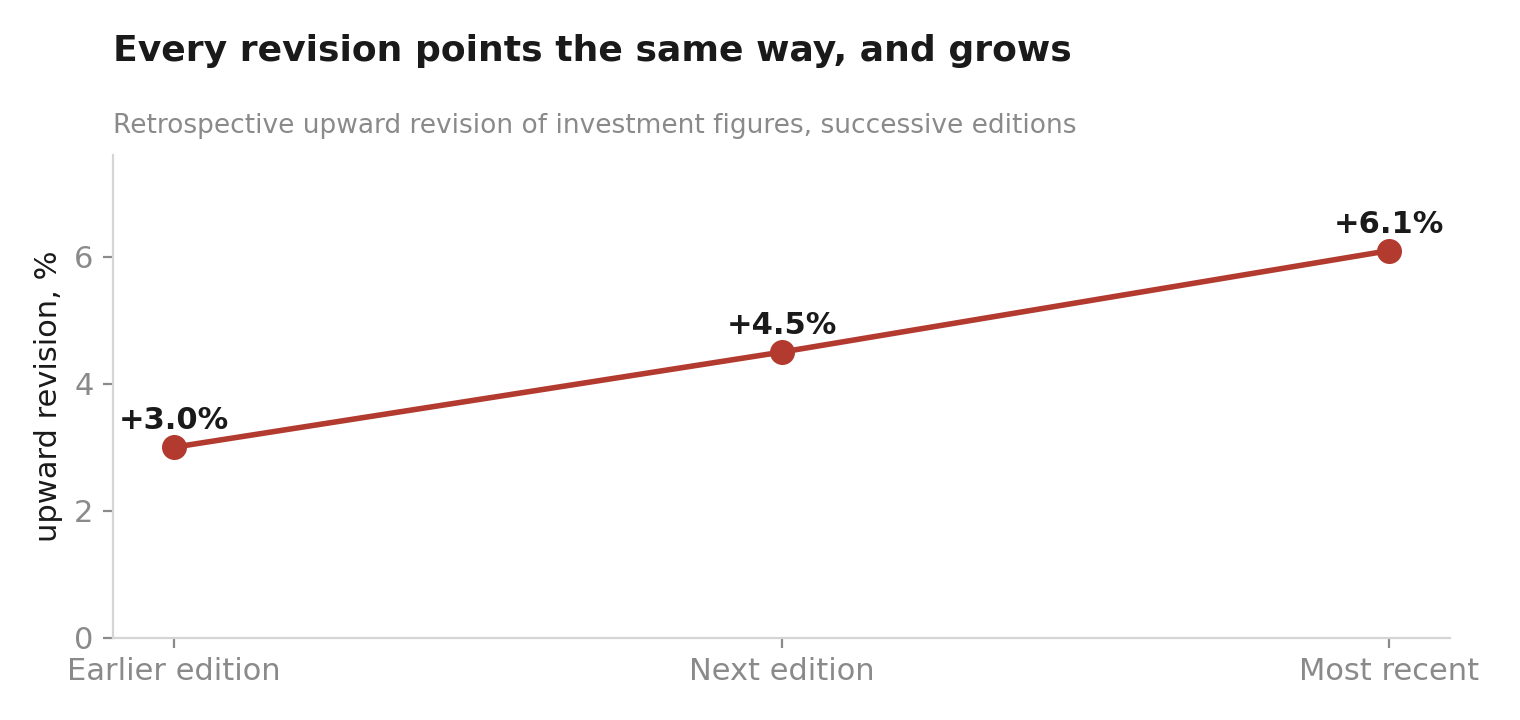
Each individual correction has a plausible technical account. A sequence of corrections that only ever points up has a property that no single one of them has: it improves the record after the first figure has finished its news cycle. The number that gets argued about is the low one. The number that survives is the high one.
Belarusian statistical publications do not always footnote a revision, and neither edition of the handbook marks this one. The change is visible only if you keep the old edition and open it beside the new one. That is what our archive of Belstat publications is for: it holds what each edition said at the time, not only what the current edition says now.
Confidence
What follows
Two editions of the same official handbook give two different figures for 2024 investment, and nothing published connects them.
The correction was upward, and it first appeared in a thematic booklet, not in the publication that carried the original.
Independent media did not report the revision at all — the state figure was corrected without opposition, and without notice.
Across editions, investment revisions run upward only, and the size of the correction is increasing.
If the mechanism holds, the first figure published for 2025 investment will again be lower than the figure standing in that same series a year later. We will check, and report either way.