
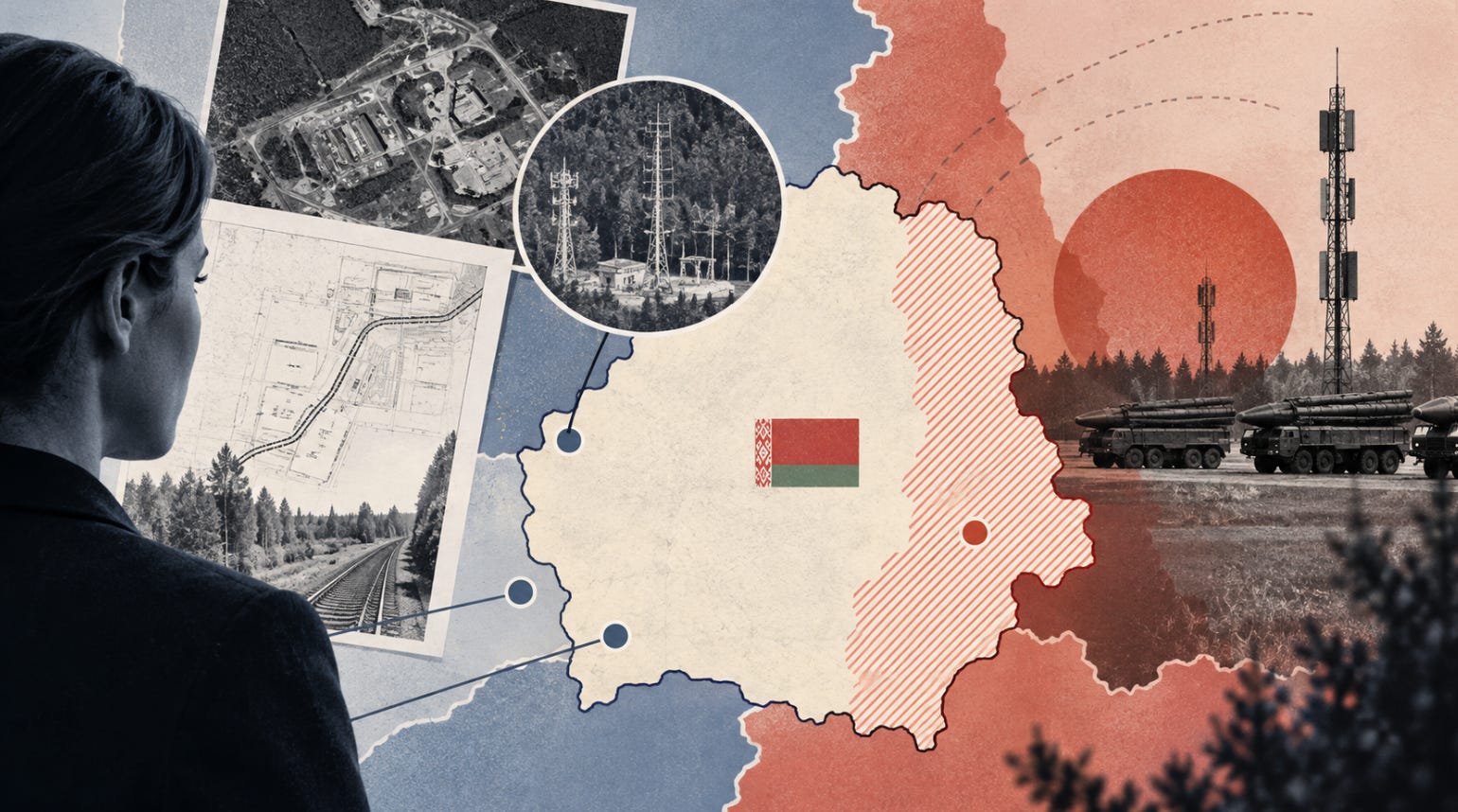
On 3 September Sviatlana Tsikhanouskaya told the Lithuanian portal 15min that Russia can use Belarusian territory to escalate and provoke NATO neighbours, and that she receives sensitive information from Belarus about new military infrastructure going up there: military antennas, near the Ukrainian border and near the EU border alike. The next day the Lithuanian president’s chief national security adviser, Deividas Matulionis, said intelligence cannot confirm that infrastructure is growing, and asked where she gets such information. Both deserve to be taken seriously, and the disagreement is narrower than it looks.
What was said
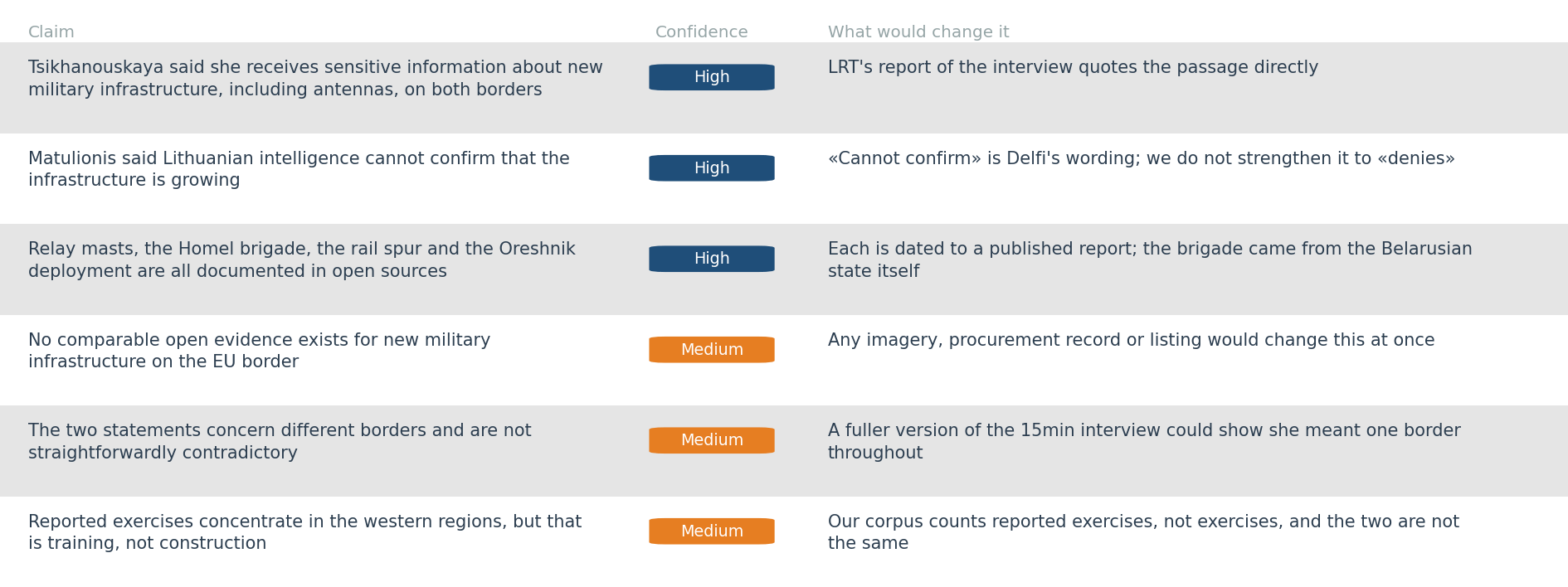
Her words were specific. Sensitive information from Belarus. New military infrastructure that a country not preparing to escalate would not need. Various military antennas. Not only at the Ukrainian border, but at the border with EU states too.
Matulionis was equally specific, and his phrasing matters. Intelligence cannot confirm her claims about growing military infrastructure. He did not call the claims false. He said his service cannot stand behind them, and he wondered aloud about the source.
That question is the interesting one, because a good deal of what she describes needs no source at all.
What is already on the record
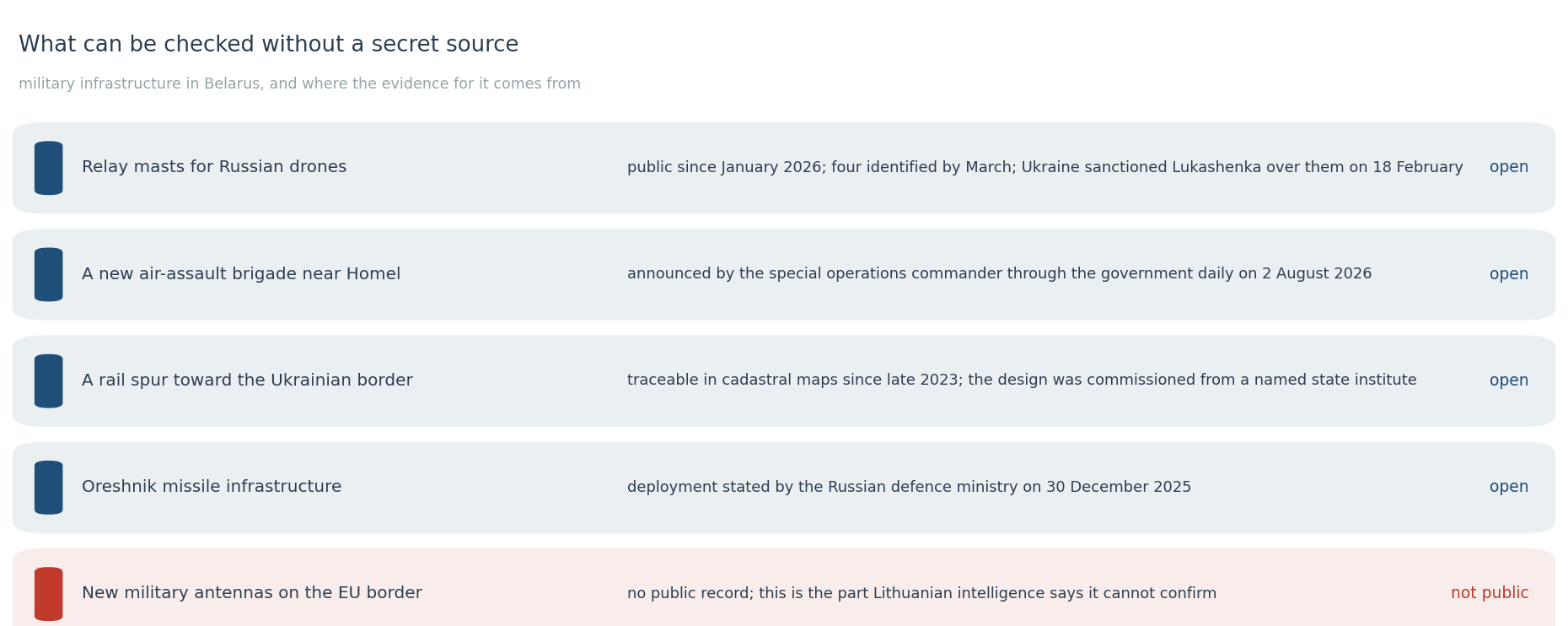
Take the antennas first, since they are her own example. Relay masts that extend the range of Russian drones over Ukraine became public in January 2026. Researchers had located four by March, and on 18 February Ukraine imposed sanctions on Lukashenka over them. None of this required a confidential channel; we set it out on 21 August while checking someone else’s chronology.
The rest of the Ukrainian-border picture is equally open. On 2 August the commander of Belarus’s special operations forces announced a new air-assault brigade near Homel, through the government daily. A rail spur toward that border shows in cadastral maps from late 2023, and a named state institute did the design work. The Russian defence ministry confirmed the Oreshnik deployment on 30 December 2025.
So for one half of her claim, the evidence is published, dated and attributable. The Belarusian state published some of it.
The strongest part of the case needs no confidential source. Minsk announced it.
Some of the evidence was published by the Belarusian state itself.
Where the two accounts actually part
The other half is the EU border, and there the record is thin.
We hold nothing comparable: no announced unit, no cadastral trail, no imagery, no sanctions listing. Our own count of reported exercises across fifteen months puts activity in the western regions, but exercises are training, not new construction, and the two should not be conflated.
That is exactly where an intelligence service should know more than we do, and exactly where it says it cannot confirm. The disagreement is not about Belarus arming. It is about one specific claim, on one specific border, sourced in a way nobody outside can test.
He did not say she is wrong. He said his service cannot stand behind it.
Why this matters for the argument
Nothing here suggests the claim is untrue. Intelligence services decline to confirm things for many reasons, including that a thing is true but not yet shareable.
The point is about what makes an argument hold when it is contested. Nobody can examine a claim that rests on sensitive information, so it stands or falls on the audience’s trust in the speaker. Anyone can check a claim that rests on a cadastral map, a sanctions listing and a government newspaper — including people who do not trust the speaker at all.
For the Ukrainian border, the second kind of evidence exists in quantity. Leading with the first kind invites the question Matulionis asked, and nobody can answer it.
This is not a small matter of presentation. Belarus’s democratic movement is asking European governments to act on its reading of what is happening inside the country. That reading persuades more, not less, when it points at what those governments can verify for themselves.
A cadastral map persuades people who do not trust you. A sensitive source does not.
Confidence
Watch
Any public evidence of new military infrastructure on the Belarusian side of the EU border appears: imagery, procurement, cadastral records or a sanctions listing.
Lithuanian intelligence revises its position in either direction after the CSTO exercises of 11–16 October.
Tsikhanouskaya’s office sets out which of its claims rest on open sources and which do not.
A second NATO government states a position on the same question. So far only Lithuania has.
Method and limits
The quotations come from LRT’s report of the 15min interview, published 3 September, and from Delfi’s report of Matulionis on the same subject. We have not seen the 15min interview in full, and a longer version may contain qualifications that the reports omit.
“Cannot confirm” is not “denies”, and the difference carries the argument. We use the phrasing Delfi published and do not strengthen it.
We compiled the open-source items listed here in earlier work, and date each to the report that established it. The relay masts, the brigade, the rail spur and the Oreshnik statement are separate matters that happen to sit on the same border; nothing here treats them as a single programme.
Our exercise counts come from our own corpus and measure reported exercises, not exercises. We use them above only for what they can support: training activity is not the same as new construction.