
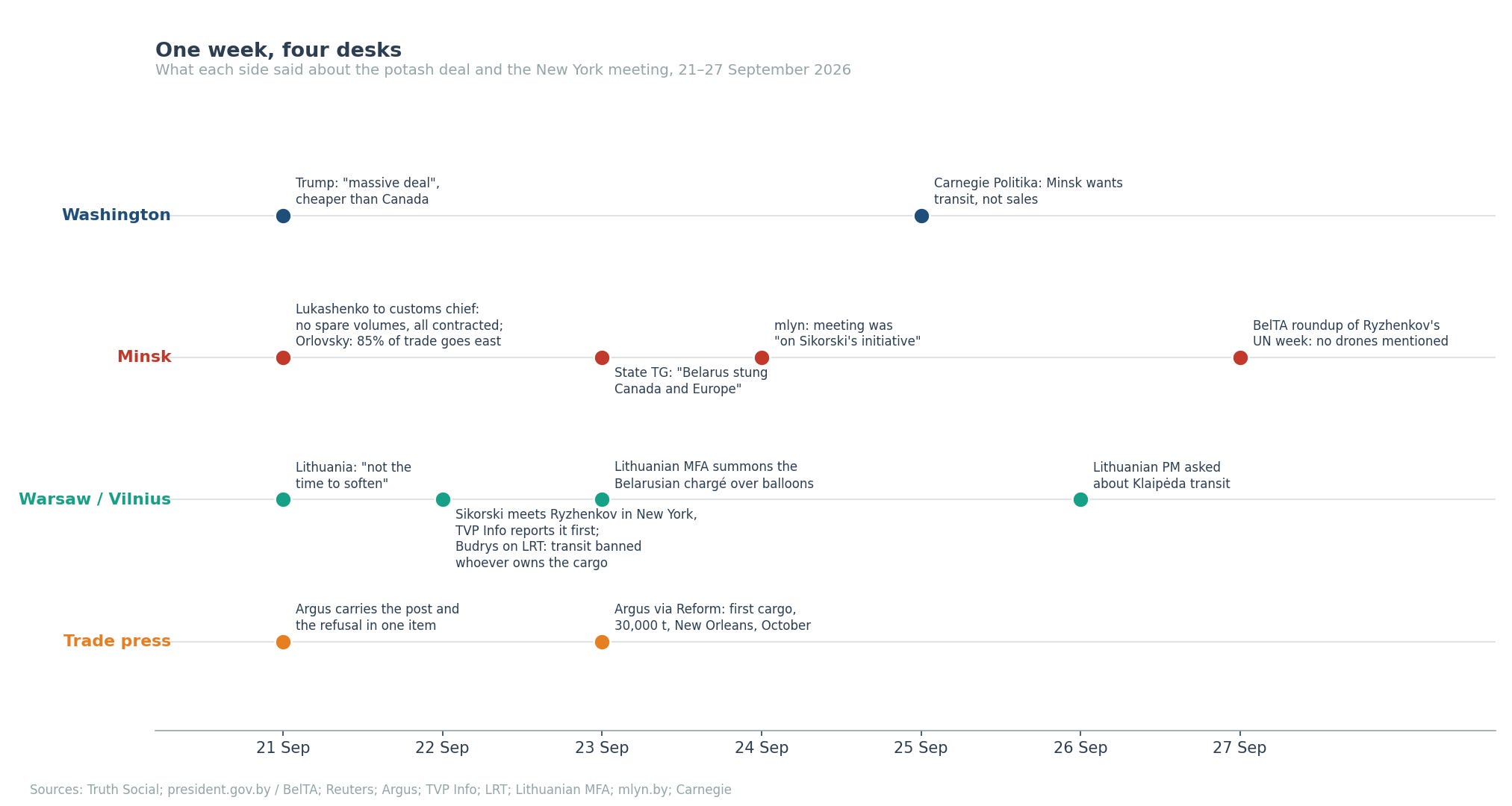
On the morning of 21 September Donald Trump wrote that the United States was working on a massive potash deal with Belarus, one that would undercut Canada. By the afternoon Lukashenko, receiving the head of the State Customs Committee, had said the opposite of what a buyer wants to hear: there are no spare volumes, everything is contracted for this year, next year can be discussed. In the same meeting the customs chief reported that 85 percent of the country’s trade now moves east.
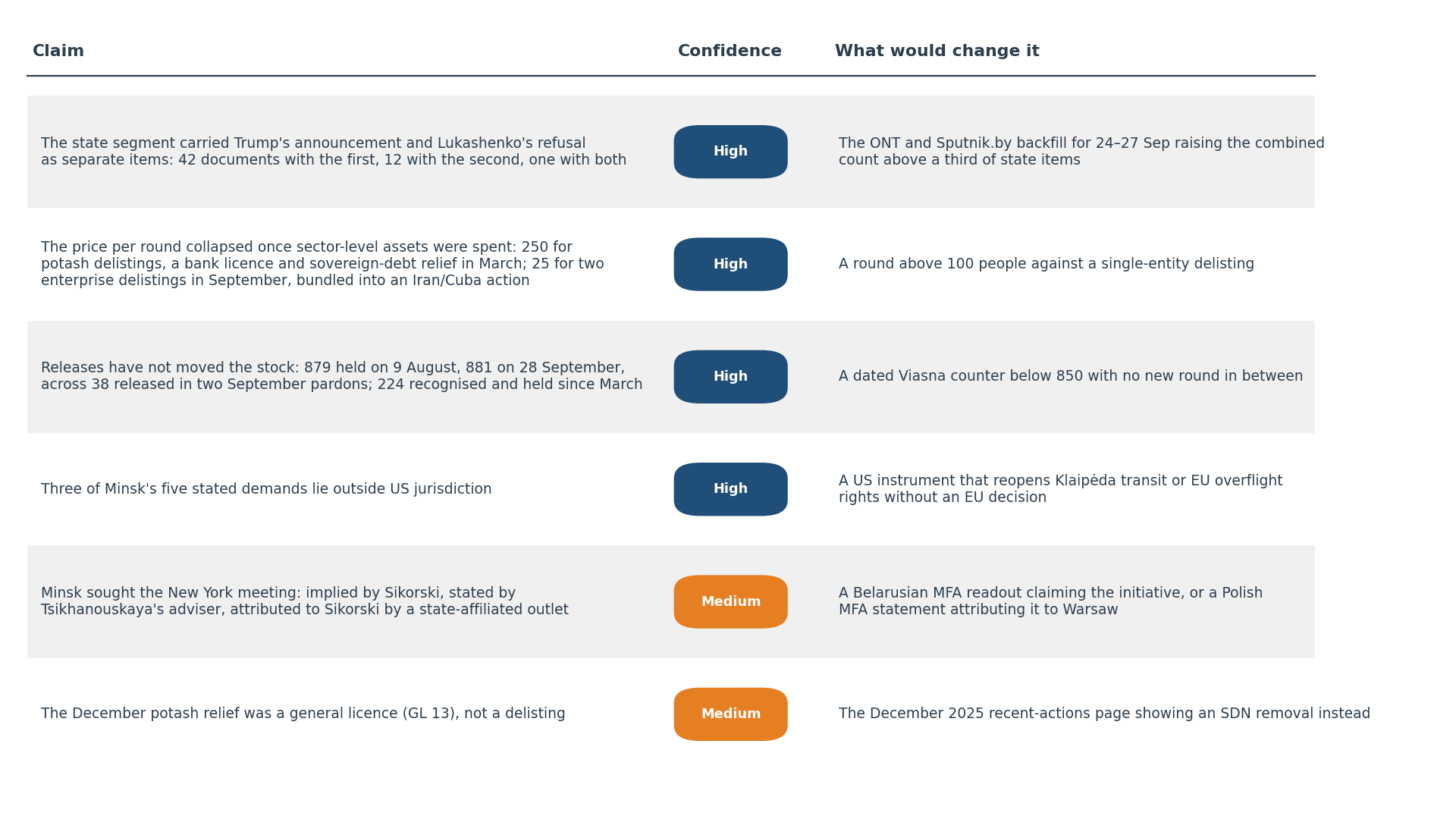
Two statements, one day, one commodity. The trade press put them together: Argus’s item that evening carried Trump’s post and Lukashenko’s “mostly contracted” in the same paragraph, sourcing the second to BelTA. Belarusian state media did not. Across the week, state outlets and pro-regime Telegram channels published 42 items carrying the announcement and 12 carrying the refusal. One item carried both, a pro-regime channel four days later, on a different subject. The eleven refusal items are all the customs readout of 21 September, syndicated down the BelTA vertical; on the same day the same outlets ran the American announcement fourteen times as a separate story. After the 21st the refusal disappears from the state segment entirely, while the deal keeps running. It kept running past the buyer, too: on the Tuesday, at the UN, Trump told reporters the United States would continue to go with Canada, and that Belarus would like to sell for less. Belarusian state outlets ran the deal 28 more times over the following six days. His Tuesday sentence reached the segment once, as a pro-regime Telegram post mirrored across two channels that quoted it in full under a headline insulting Canada; no state outlet’s site carried it. The chairman of the state broadcaster said the same day that Ottawa was being thrown off the American market and that he hoped Belarus would take Canada’s place.
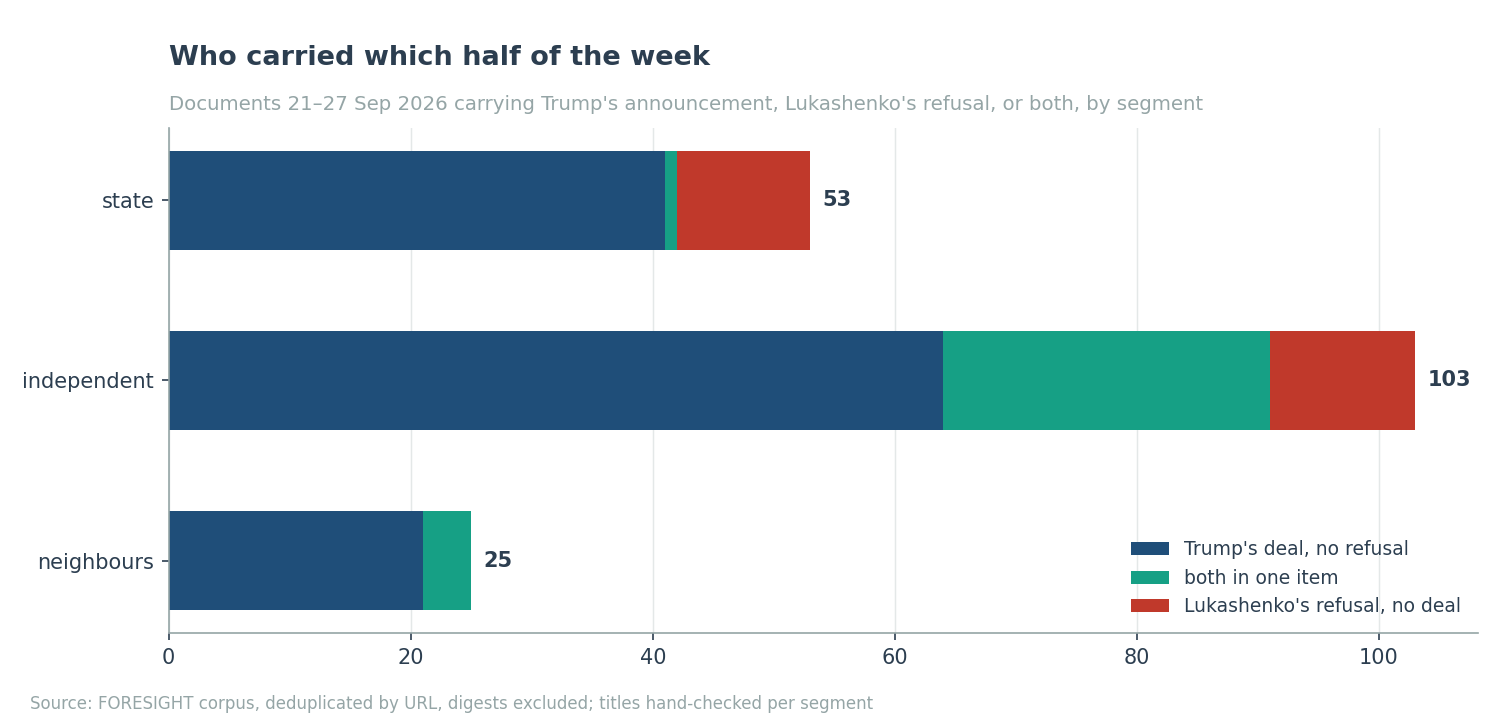
Russia’s Sputnik Belarus, six items after the backfill, joined the two halves in two of them, once to argue that the EU was scheming against Minsk. Belarusian state outlets did not. Independent outlets joined the halves in 27 of 104 items, from the first day: Lukashenko is raising the price, Lukashenko has no spare potash for Trump, why a deal if the volume is committed. The state segment took the Canadian framing instead: 25 of its 42 deal items repeated that Belarusian potash would be cheaper than Canada’s, a line that is good for Minsk and cannot be checked, since no Belarusian price has been published. Argus gives Nutrien’s Midwest offer at $410 a short ton and nothing on the other side.
The trade press did in one paragraph what the state segment did not do in fifty-three documents.
Measured in one ship
The deal has a tonnage now. On 23 September Reform relayed Argus: the first Belarusian potash cargo to the United States in four years, 30,000 tonnes of muriate of potash, is due at New Orleans in October. The last Belarusian potash to reach American soil arrived in February 2022.
Three comparisons place the number. Canada supplied around 11.2 million tonnes to the United States in 2025, close to 90 percent of imports, so one cargo is a quarter of a percent of that. Belarus itself shipped an average of 635,000 tonnes a year to the American market in 2017 to 2021; one cargo is under five percent of that, and it would take twenty-one such ships to get back to the old average. Argus names the destination port and no port of departure. Belarus is landlocked and the Baltic ports are closed to its potash, and DW’s commentator allowed that the route may run through Russian ports, but no source has reported where the ship was loaded. Sputnik’s Russian rendering turned New Orleans into the place of loading, and one Belarusian business site copied the error.
The American farm press measured it the same way. StoneX’s fertilizer desk told AgWeb that not a tonne of Belarusian potash had reached the United States since late 2021 or 2022, that the record year was 2010 at about 750,000 short tons, and that Belarus would not return as a supplier unless Lithuania agreed to reopen the border, which the desk had not heard. The Fertilizer Institute puts US import dependence for potash at about 86 percent. A US industry analyst naming Lithuania as the gate is worth noting, because the Lithuanian government spent the same week saying no request had reached it.
Five Belarusian independent outlets ran the cargo story from Reform’s rendering. None linked the Argus original.
What each round bought
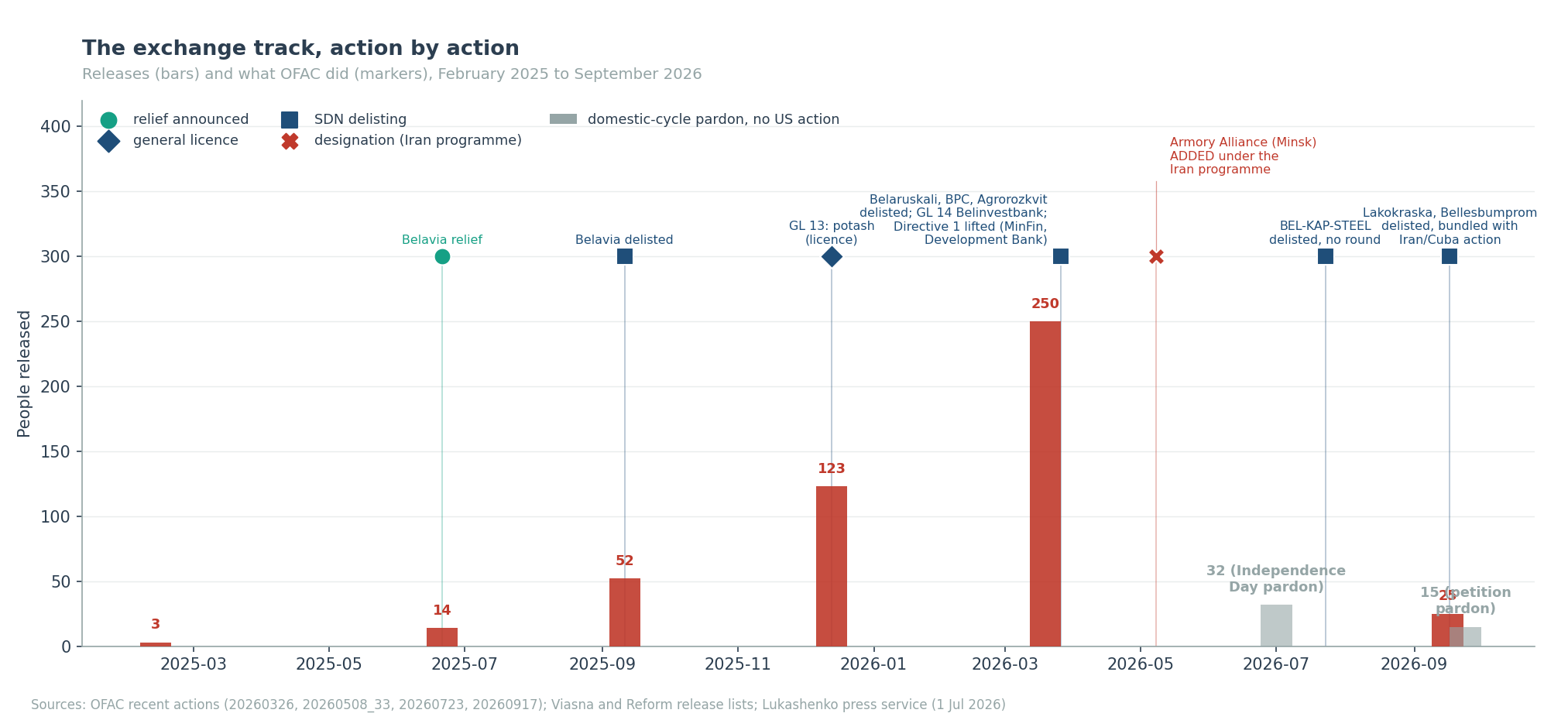
The potash week sits on a longer track, and the track has a price list. Since February 2025 Washington has brokered six releases from Belarusian prisons, and the OFAC record shows what it gave for each.
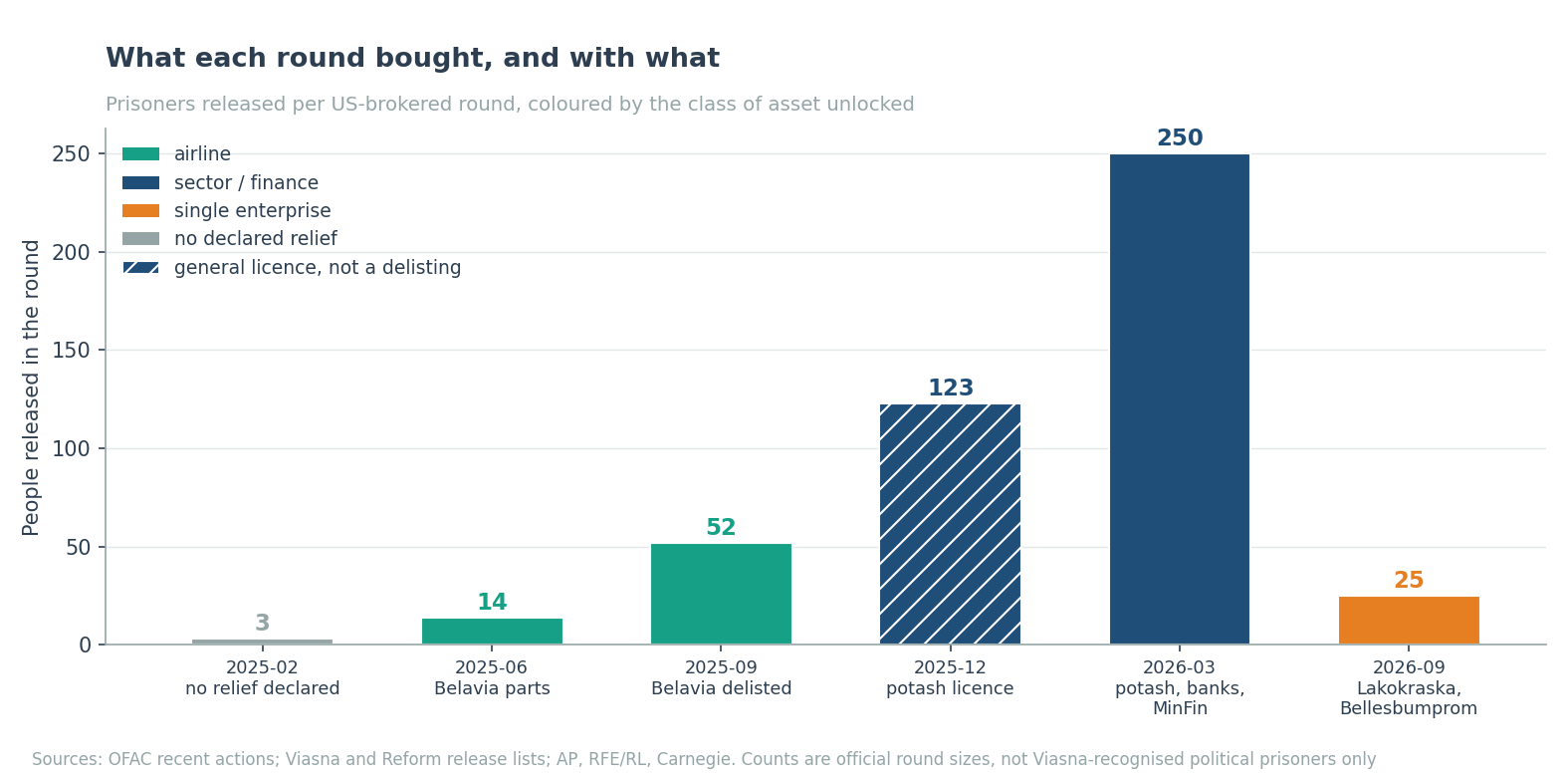
The first three rounds bought airline relief: 14 people in June 2025 as Belavia’s servicing restrictions eased, 52 in September as Belavia came off the list. December bought the sector: 123 pardoned against the first potash easing, which Argus dates as the lifting of the potash sanctions and which OFAC’s own record identifies as General License 13, an authorisation that left Belaruskali on the list. March bought the rest. On 26 March 2026 OFAC removed Belaruskali, the Belarusian Potash Company and its Kyiv-registered affiliate Agrorozkvit from the SDN list, issued General License 14 for Belinvestbank, rescinded Directive 1 for the Ministry of Finance and the Development Bank, and archived GL 13 as no longer needed. That was the largest release on record, 250 people, and Viasna’s count is that 235 of them stayed in Belarus and 15 were taken to Lithuania.
September bought two enterprises. On 17 September OFAC deleted Lakokraska, a paint plant in Lida listed under the pre-2021 Belarus programme, and the timber concern Bellesbumprom, listed in 2021. The deletions came inside a mixed action whose press releases concerned Iran and Cuba; Treasury issued no statement on Belarus. Against that, 25 people, all taken to Lithuania. The special envoy had told Voice of America on 29 August that the next visit would free two to three hundred; Viasna’s Uladzimir Labkovich said afterwards that the round should have been at least two hundred.
Sector, then finance, then a paint factory: the assets ran out before the prisoners did.
Two other OFAC entries belong on the same line. On 8 May a Minsk company, Armory Alliance, was added to the list under the Iran non-proliferation programme as part of a UAV-components network, with a Belarusian and an Iranian national. And on 23 July a Miami-registered affiliate of the Belarusian Steel Works was delisted with no release attached; the nearest pardon, 32 people on 1 July, was the annual pre-Independence Day exercise that happens whether or not an envoy is in town. The Belarus programme was being unwound one entity at a time while the Iran programme added a Belarusian one.
The equation the regime wrote
The arithmetic of the exchanges was public before the September round. When a user on X told the envoy that for every hundred freed the regime jails two hundred, he replied that more than seven hundred had been released; in the Voice of America interview he put the total at 700 to 800 and hoped for a thousand. Svaboda’s own count was 646 released over two years, not all of them political prisoners.
On 15 September, with the envoy at the table, Lukashenko answered the X user rather than the envoy. In BelTA’s transcript he says the exiles have convinced Washington that Belarus releases some people and, continuing repression, detains twice as many in their place, and calls this “an absolute untruth”. The next day the head of the presidential administration raised the figure the regime was denying to two or three for every one released. Viasna answered the same afternoon, on its site: since the 250 of 19 March, human rights defenders had recognised 224 people as political prisoners who remained in custody, and a further 138 whose recognition came after they were already free, 362 in all.
So the ratio is not two to one. It is closer to one to one. Two hundred and fifty went out in March, 224 came in by mid-September and are still inside.
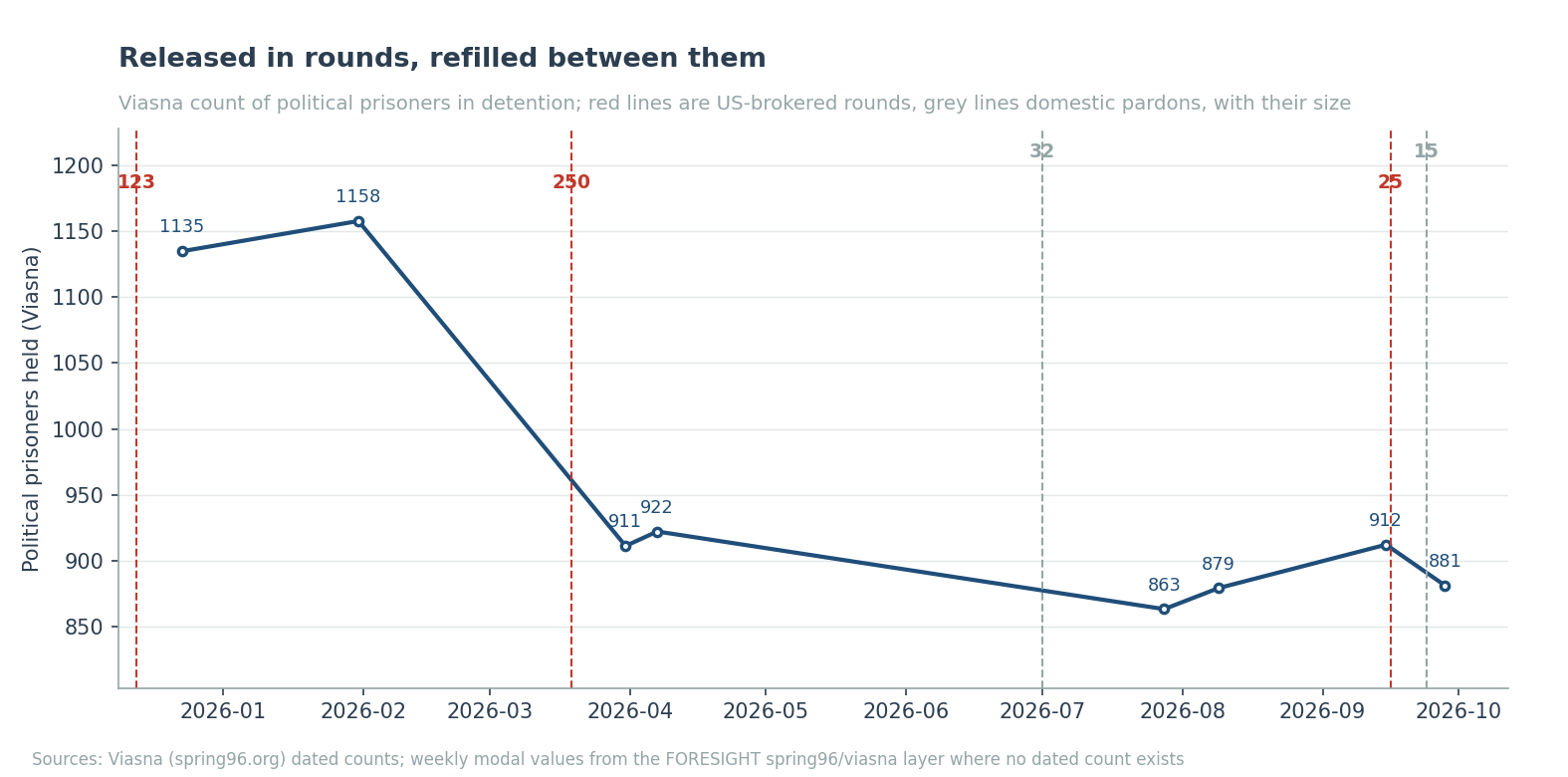
The counter says the same thing. Viasna’s list stood at 879 on 9 August, 912 on 15 September, the day before the round, and 881 on 28 September.
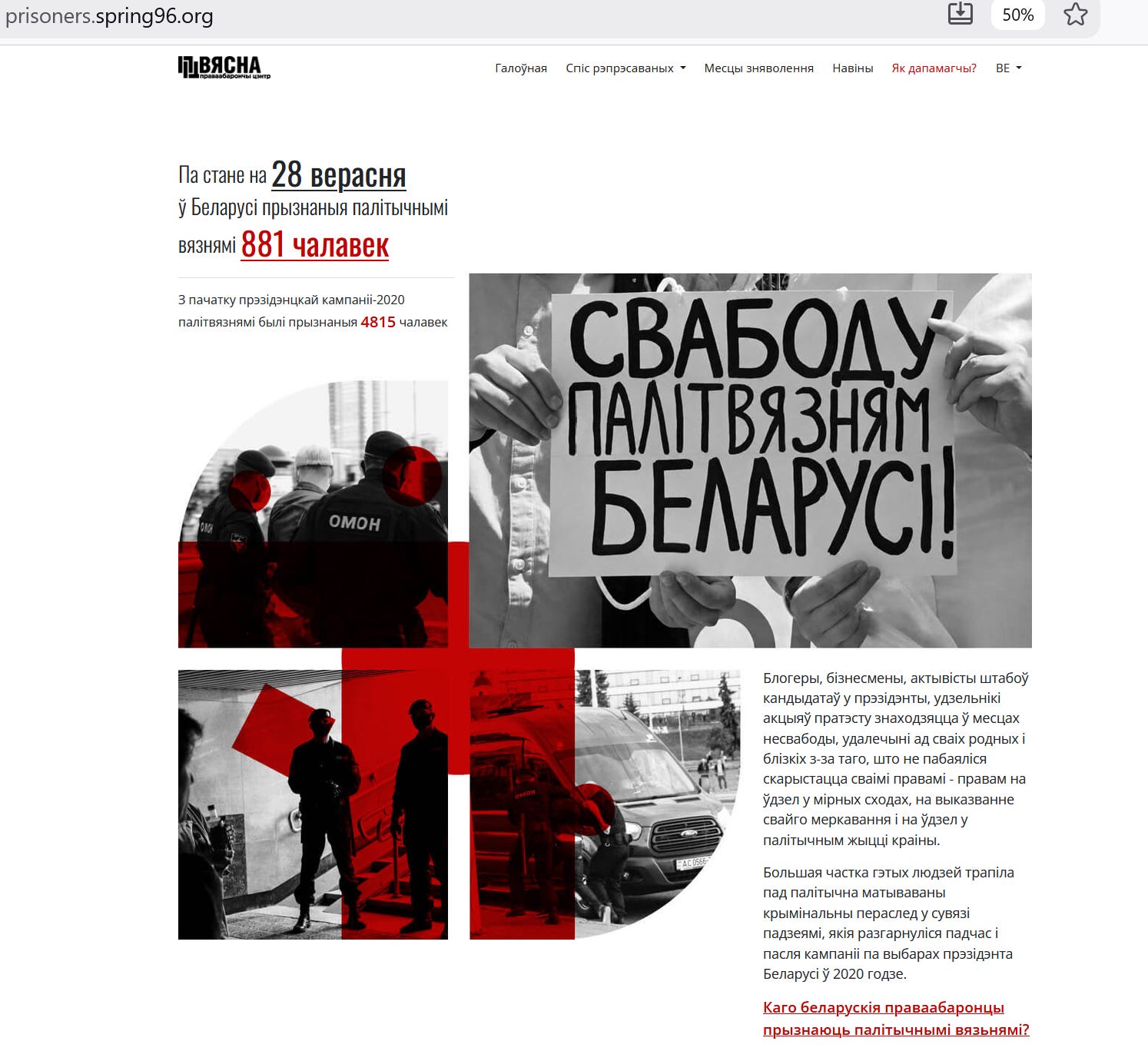
In between, 25 left on 16 September and a further 13 political prisoners were among 15 pardoned on 24 September, a petition-track pardon with no American announcement attached, ten of them women. Seven weeks, two releases, thirty-eight people out, a net change of two. The tally of everyone recognised since 2020 went from 4,602 to 4,815 in the same weeks, about four new names a day, some of them for people already out. On 21 August we wrote that the stock does not stay down; it now does not move at all.
Two hundred and fifty out in March, two hundred and twenty-four in by September, and the counter reads two higher than it did in August.
Where the demands live
What Minsk says it wants in return is on the record. Transit through Klaipėda, which the deputy foreign minister and the customs chief both raised this month. The release of potash payments frozen in an American bank, put at $43 million by Carnegie’s author and at more than $40 million by Lukashenko on 11 September. Normal operation for Belavia in Western markets. Banks that stop blocking compliant payments. Engagement with Europe as it is.
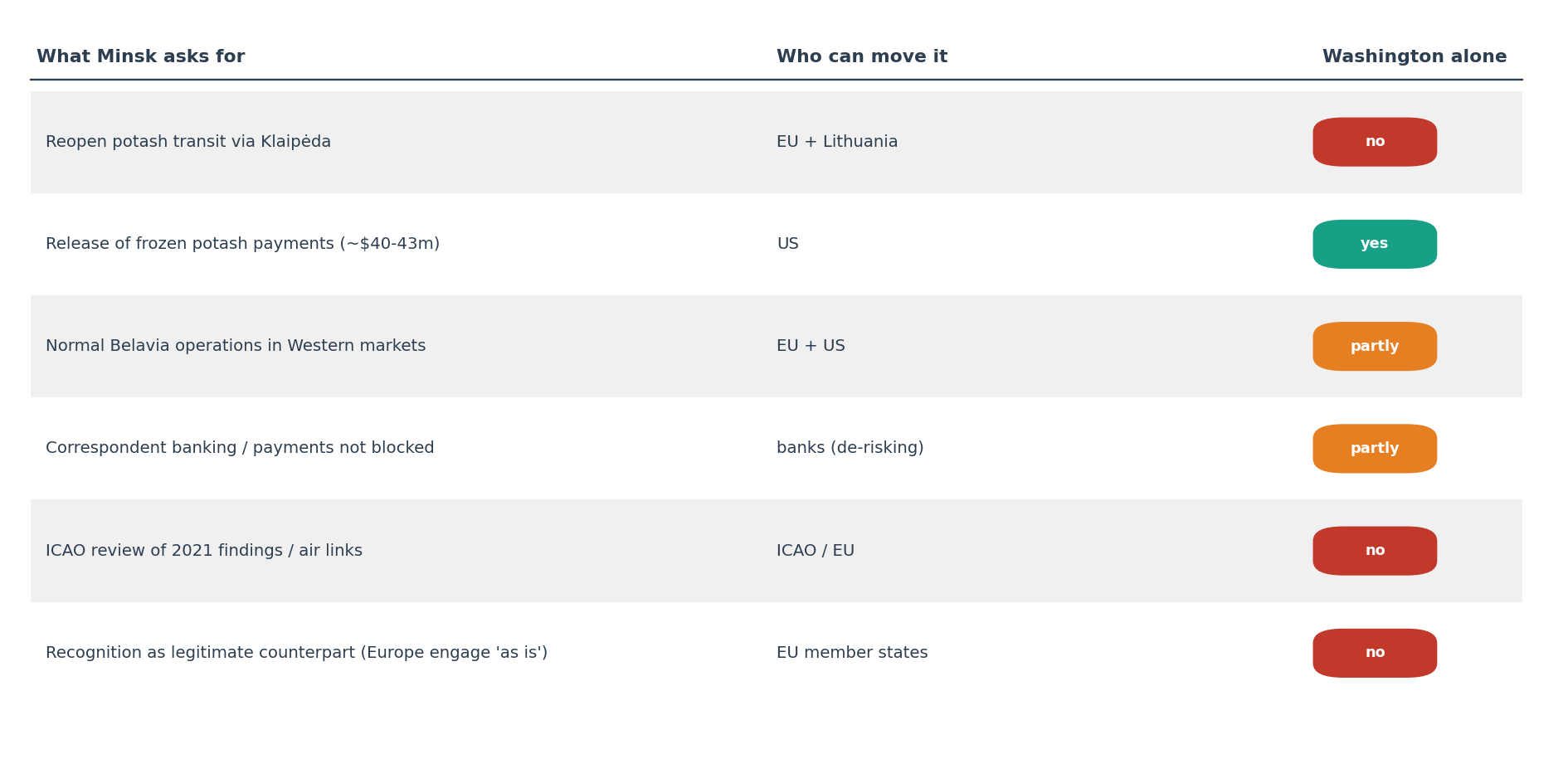
Of the five, Washington can deliver one on its own, the frozen money, and can nudge a second, the banks, which respond to risk rather than to lists. Transit is an EU sanctions matter renewed to February 2027 and a Lithuanian decision on top of it; Lithuania’s foreign minister said on LRT on 22 September that the rules ban both purchase and transit whoever owns the cargo, and that he had consulted the Americans on exactly this. What Vilnius would be accepting is concrete, and Lithuanian outlets said so in the same week. LRT and Delfi ran 33 items on the deal in seven days, and in at least six of them an official or a former one named national security as the obstacle rather than the sanctions alone. Budrys said the American decision would affect regional security and stated a pattern: every previous US attempt to soften relations with Belarus had ended in aggressive Belarusian behaviour on the border with its neighbours. Ingrida Šimonytė listed two obstacles, EU sanctions and Lithuanian court rulings resting on the security services’ finding that Belaruskali transit threatens national security. The president’s national security adviser said the presidency had no information on the deal and wanted clarity from Washington. The prime minister said Lithuania had received no American request on transit and, two days later, that the talks were a great powers’ game in which Lithuania was an observer. The domestic split the American track would need also showed: Vytenis Andriukaitis, honorary chairman of the governing Social Democrats, argued for transit in exchange for Ukrainian grain and against what he called hurrah-patriotism; the liberal MEP Petras Auštrevičius called involvement in the deal disastrous.
What the trade would ask of Lithuania is therefore on the record: Belarusian state cargo by rail across the country and through Klaipėda while the same state’s balloons enter Lithuanian airspace, the reason its chargé was summoned on 23 September, and while the border service has counted a dozen tunnels under the fence this year, a series we followed on 23 August, with a €12 billion Belaruskali arbitration claim pending against the state. What Lithuania would get is transit revenue the railway has been losing, on the order of €100 million a year by Carnegie’s earlier estimate, and a request from its security guarantor honoured. Lithuanian sources name the security half of that trade; none of the 189 items in the week, on any side, puts a number on it. Budrys’s pattern, softening followed by border aggression, is a claim with dates on both sides, and our border series can test it.
Belavia’s European access is an EU flight ban. Recognition is a Council position. The ceiling on the American track is not a matter of will, and the September round is what the track looks like once the assets under Washington’s own hand have been spent.
A snowdrop in New York
On 22 September the Polish and Belarusian foreign ministers met at the UN, the first contact at that level since about 2016. TVP Info reported it before anyone in Minsk did. Sikorski called it a first, introductory meeting, said other ministries meet at other levels, announced a new embassy building in Minsk, and answered the question of normalisation with a snowdrop that may bloom if the weather allows. On whether Poland recognises the government: as a state, Poland recognises states.
Who asked for the meeting is contested along segment lines. Sikorski’s phrasing, that when a neighbour wants to unfreeze relations Poland is always first to agree, implies the neighbour; Tsikhanouskaya’s adviser said plainly that Minsk asked; the state-affiliated mlyn.by wrote two days later that the meeting took place on Sikorski’s initiative. No Belarusian official source has claimed it. Sikorski also credited the calmer border to two things in this order: the fence successive Polish governments paid for, and the release of political prisoners including Andrzej Poczobut. Carnegie’s reading, that Warsaw was acknowledging Minsk’s compliance, is half of what he said.
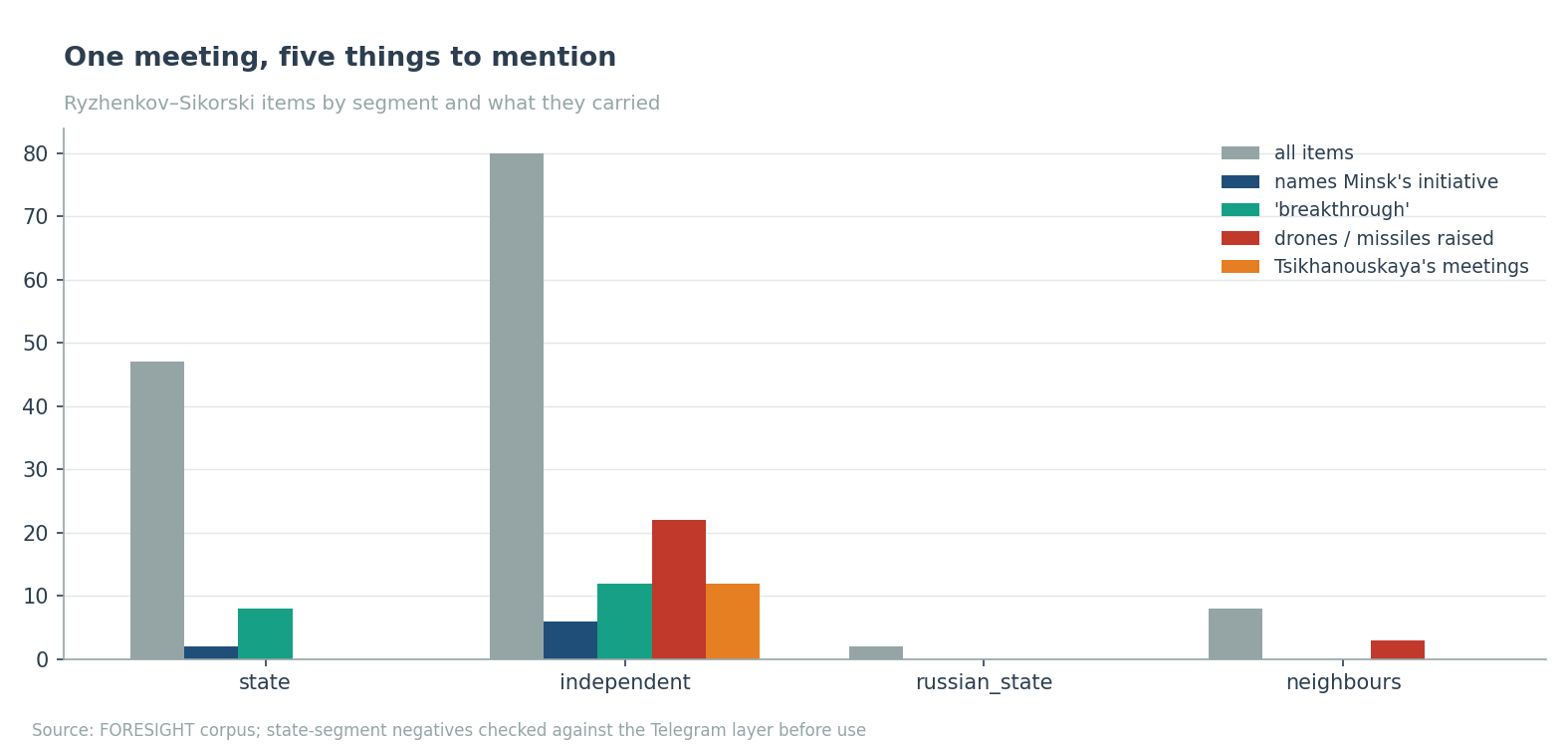
Asked whether he had requested that Belarus stop letting Russian drones and missiles cross its territory, Sikorski said “among other things”. The state segment produced 47 items on the meeting. None mentions drones or missiles. None mentions Tsikhanouskaya’s team, which met Sikorski before and after. Eighteen mention the embassy building, nine the snowdrop. Independent outlets raised the drone question in 22 of 80 items. BelTA’s roundup of the foreign minister’s UN week on 27 September lists initiatives, meetings and souvenirs and does not contain the word.
Eighteen state items on the embassy building, nine on the snowdrop, none on the drones.
Watch items
By 15 November 2026, following the envoy’s next visit expected in mid-October, the round is smaller than a hundred people and the relief named is again a single entity, not a sector. On 31 October, Viasna’s counter is above 850 if no round has taken place in between. Before the EU renews its Belarus measures in February 2027, no member state moves on potash transit, and Lithuania’s position is unchanged. By 31 December, the second cargo to the United States is either announced with a port of departure or not announced at all. By the same date, the Belarusian foreign ministry has published a readout of a Polish working-level meeting that names a subject, or has not.
Method and limits: corpus counts cover 21 to 27 September 2026 in the FORESIGHT corpus, deduplicated by URL, with digests excluded by title and Telegram channels segmented by handle; markers were tested as text windows and every matched title was read by segment before a ratio was used. ONT’s site and Sputnik Belarus were backfilled for 24 to 27 September after the first count; the backfill added no state items and four Russian ones, and the state figures did not change. One prominent state persona channel has been silent since 15 September. Russian state media are six items and are named in the text rather than charted. Polish and Ukrainian outlets are thematic slices, and the Polish side was read by hand; LRT and Delfi are held in both their Lithuanian and Russian editions, and the 33 Lithuanian items were counted by URL, not by edition. The 24 September pardon of 15, 13 of them political prisoners, is treated as a domestic petition-track pardon rather than a US-brokered round because no US action or announcement accompanied it. Release figures are official round sizes; Viasna’s counts of political prisoners within rounds are given where the organisation published them. Viasna’s counter is a lower bound by its own statement. The December instrument, General License 13, is inferred from its archival on 26 March; the December action page has not been read. The Argus first-cargo item gives no port of departure, and the piece makes no claim about the route. Attribution of the New York meeting’s initiative is contested and is reported as such.